

In a hospital, every second matters—and so does every piece of equipment.
From ventilators and infusion pumps to ECG machines, monitors, wheelchairs, and diagnostic devices, medical equipment plays a critical role in patient care. But managing hundreds of assets across departments manually can quickly become complex.
Missed maintenance schedules, misplaced equipment, unexpected breakdowns, and lack of visibility can directly impact operations, staff productivity, and patient outcomes.
This is where a Medical Equipment Management System (MEMS) becomes essential.
What is a Medical Equipment Management System (MEMS)?
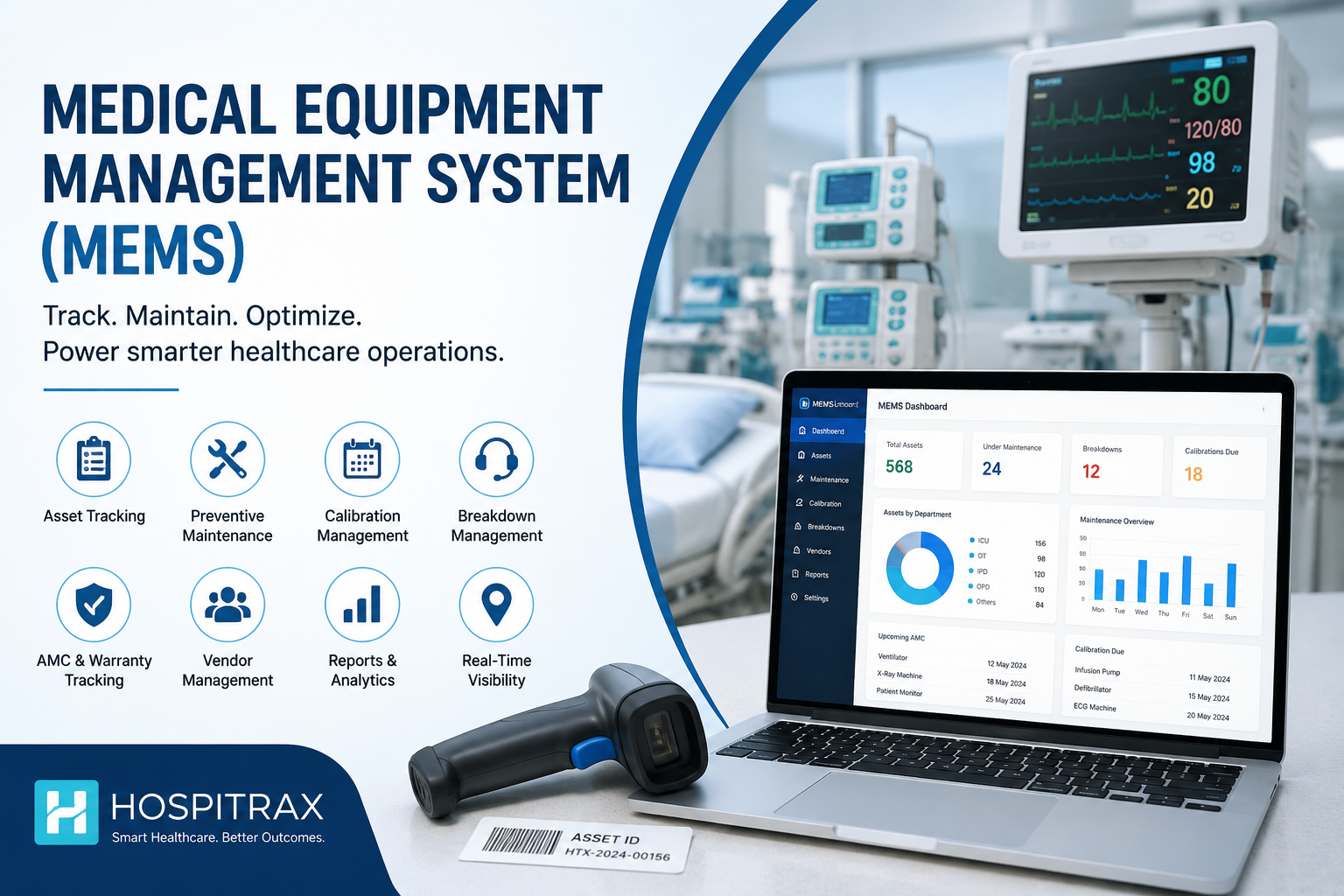
A Medical Equipment Management System (MEMS) is a centralized digital platform that helps hospitals track, monitor, maintain, and manage all medical equipment throughout its lifecycle.
It gives hospitals complete visibility into:
- Equipment inventory
- Asset location
- Maintenance schedules
- Calibration due dates
- Breakdown history
- Warranty and AMC details
- Vendor records
- Utilization and downtime reports
Instead of managing equipment on spreadsheets or paper logs, hospitals can operate from one dashboard with real-time visibility.
Why Hospitals Need MEMS Today
Hospital equipment is expensive—and downtime is costly.
Without a proper system, common challenges include:
- Difficulty locating equipment during emergencies
- Delayed preventive maintenance
- Missed calibration deadlines
- High equipment downtime
- Poor asset utilization
- Untracked repair costs
- Compliance risks during audits
A MEMS helps solve these operational gaps by digitizing the entire equipment management process.
Key Features of Hospital Cloud Medical Equipment Management System
1. Centralized Asset Inventory Management
Maintain a complete digital inventory of all biomedical and non-biomedical equipment.
Track:
- Asset ID / barcode
- Equipment name
- Model number
- Serial number
- Department
- Purchase date
- Cost
- Vendor details
- AMC / warranty period
- Current status
No more scattered spreadsheets or missing records.
2. Real-Time Equipment Tracking
Know exactly where each piece of equipment is located.
Track movement between:
- ICU
- OT
- IPD
- OPD
- Emergency
- Labs
- Radiology
- Nursing stations
This reduces search time and improves equipment availability.
3. Preventive Maintenance Scheduling
Schedule preventive maintenance automatically based on:
- Monthly cycle
- Quarterly cycle
- Annual maintenance plan
- Usage hours
- Manufacturer recommendations
Automated reminders ensure your biomedical team never misses service deadlines.
4. Calibration Management
Critical equipment requires regular calibration to ensure accuracy.
MEMS helps track:
- Calibration due dates
- Last calibration date
- Calibration certificates
- Responsible engineer
- External vendor details
This helps maintain quality standards and audit readiness.
5. Breakdown & Complaint Management
Hospital staff can quickly log equipment complaints.
Examples:
- Monitor not functioning
- Pump battery issue
- Ventilator alarm issue
- Device power failure
Biomedical teams receive alerts instantly, assign engineers, and track resolution status from open to closed.
6. AMC & Warranty Tracking
Never miss warranty expiry or AMC renewal.
Track:
- Warranty start/end date
- AMC contract value
- Vendor SLA
- Renewal reminders
- Service visit history
This helps avoid unnecessary repair costs.
7. Vendor & Service History Management
Maintain complete vendor records for every asset.
Store:
- Vendor contact details
- Purchase invoice
- Installation records
- Service history
- Spare parts replaced
- Cost of repairs
This improves vendor accountability and decision-making.
8. Reports & Analytics Dashboard
Make faster operational decisions with actionable insights.
Generate reports on:
- Equipment utilization
- Downtime %
- Maintenance cost
- AMC due list
- Warranty expiry list
- Breakdown frequency
- Equipment by department
- Equipment nearing replacement
These insights help hospitals optimize capital expenditure and reduce operational waste.
Benefits of MEMS for Hospitals
Improve Equipment Availability
Ensure critical equipment is available when needed most.
Reduce Downtime
Preventive maintenance reduces unexpected failures.
Improve Staff Efficiency
Nurses and technicians spend less time searching for equipment.
Increase Asset Life
Regular servicing improves equipment lifespan.
Better Compliance
Stay ready for NABH, NABL, internal audits, and documentation checks.
Reduce Costs
Avoid emergency repair expenses and duplicate purchases.
Better Patient Care
Well-maintained equipment directly improves care quality and safety.
Who Can Use MEMS?
A Medical Equipment Management System is useful for:
- Multi-speciality hospitals
- Single-speciality hospitals
- Diagnostic centres
- Nursing homes
- Day-care hospitals
- Biomedical engineering departments
- Healthcare groups managing multiple facilities
Why Choose Hospital Cloud MEMS?
Hospital Cloud MEMS is designed specifically for healthcare operations.
With Hospital Cloud MEMS, hospitals can:
- Digitize equipment lifecycle management
- Monitor assets in real time
- Reduce downtime
- Improve compliance
- Increase equipment ROI
- Manage multiple facilities from one platform
Whether you’re managing a 30-bed hospital or a large multi-location healthcare network, Hospital Cloud helps you maintain complete control over your medical assets.
Final Thoughts
Medical equipment is one of the most valuable investments for any hospital—but without proper management, it can become a source of inefficiency, delays, and unnecessary costs.
A modern Medical Equipment Management System (MEMS) helps hospitals move from reactive maintenance to proactive management.
By centralizing tracking, maintenance, service records, and analytics, hospitals can improve operations, reduce downtime, and deliver safer patient care.
If your hospital still manages equipment manually, now is the time to digitize.
With Hospital Cloud MEMS, every asset is visible, maintained, and optimized—so your team can focus on what matters most: patient care.